CAB 2026 | Wealth Inequality: A Call to Action

Follow us on LinkedIn for updates
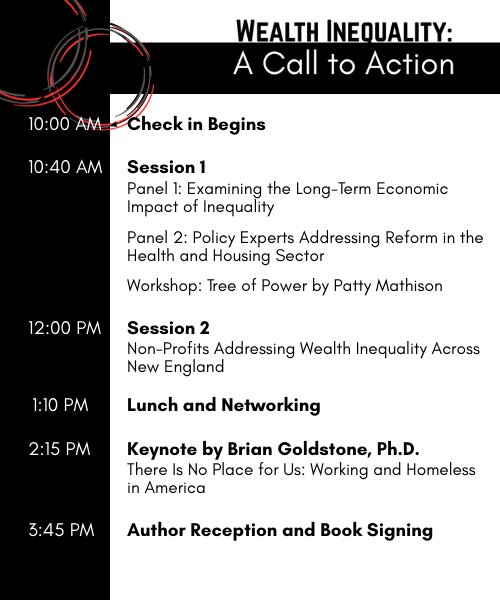
Friday, March 27, 2026 | 10:00 AM – 4:30 PM
Peter T. Paul College of Business & Economics
10 Garrison Avenue, Durham, NH 03824
--The 2026 Community, Accessibility, and Belonging (CAB) Conference, Wealth Inequality: A Call to Action, invites participants to critically examine the widening gap between those who are thriving financially and those who are struggling to meet basic needs. Across the United States, the erosion of the middle class and the concentration of wealth among the top 1% have contributed to what many describe as a K-shaped economy, one in which prosperity accelerates for some while others face increasing economic struggle. This systemic issue transcends political ideology and affects individuals, families, organizations, and communities nationwide.
Through research-driven panels, policy-focused discussions, and community-engaged perspectives, the conference will explore how wealth inequality is experienced in everyday life, its long-term economic and social consequences, and the interventions being developed to address it. Sessions will highlight current academic research, policy analysis, and the critical work of nonprofit organizations across New England that are actively working to bridge economic gaps and support impacted communities.
Registration Open January 20th, 2026
We invite students, staff, faculty, alumni, business leaders, nonprofit professionals, and members of the broader community to join us for this full-day conference as we come together to learn, share, and engage in meaningful dialogue about how we can collectively advance equity and fairness in our economic systems. All are welcome.
One of the Best Books of 2025 Comes to UNH
“Confronted with the bleak arithmetic of stagnant incomes and out-of-control housing expenses, people cut back wherever possible. Eventually, they’ve cut all they can,” writes journalist and anthropologist Brian Goldstone, Ph.D., in his 2025 book, There Is No Place for Us: Working and Homeless in America.

Goldstone is the 2026 keynote speaker for Peter T. Paul College’s Community, Accessibility, and Belonging Conference, where he will share the stories of five Black families in Atlanta, Georgia. Through their experiences, he will reveal how low wages, rising rents, and economic shifts are pricing essential workers out of stable housing and expose the growing crisis of housing instability among the employed. His book was recently named among the Best Books of 2025 by The New York Times, The Atlantic, and NPR, and was also included on former President Barack Obama’s 2025 “Favorites” list.
Goldstone brings to the stage a powerful blend of rigorous scholarship and immersive journalism. He earned his PhD in anthropology from Duke University and has been recognized with some of the country’s most prestigious awards and fellowships. However, perhaps even more compelling is his willingness to go where the stories are and expose some of the most pressing social issues of our time. Goldstone taught at Sing Sing prison and explored life after incarceration in the United States. He reported from Ghana on psychiatric care, examined chronic pain amid the opioid epidemic, and uncovered Israel’s efforts to deport African asylum seekers.
His work has appeared in The New York Times, Harper’s, The New Republic, The California Sunday Magazine, Guernica, and Jacobin, among many others, and is widely regarded as incisive, deeply human, and socially urgent. For professionals and students alike, Goldstone offers a compelling lens on inequality—and a vital invitation to rethink the systems shaping contemporary life.
Examining the Long-Term Economic Impact of Inequality
What does inequality actually do to an economy over time—and why does it matter for business, policy, and community well-being?
In this panel, leading scholars from economics, public policy, and marketing unpack how wealth inequality shapes life outcomes across generations. Attendees will gain a deeper understanding of how policies around taxation, social benefits, and energy regulation intersect with labor markets, household decisions, and access to essential resources, often locking individuals and communities into unequal trajectories.
Drawing on research spanning tax policy, energy poverty, governance, and consumer behavior, panelists will discuss how structural inequality influences where people live, how they work, their health investments, and how they participate in markets. This session offers attendees a powerful, interdisciplinary lens for understanding the broader economic consequences of inequality, and what research suggests about building more inclusive, resilient economic systems that benefit both people and markets.
Attendees will leave with:
- A clearer picture of how inequality shapes long-term economic growth and stability
- Insights into how policy and market forces can reinforce (or reduce) inequality
- Research-informed perspectives relevant to business strategy, public service, and social impact work
Policy Experts Addressing Reform in the Health and Housing Sectors
Health and housing are more than social issues—they are foundational to economic security, workforce stability, and community resilience.
This panel brings together policy researchers and practitioners to examine how health and housing systems shape economic security and well-being across communities. Panelists will discuss how existing policy frameworks in healthcare financing, housing investment, and social services influence access, affordability, and long-term outcomes, particularly for populations experiencing economic disadvantage.
Drawing on evaluation research, applied sociological analysis, and extensive experience in health law and Medicaid administration, the panel will explore how programs are designed, implemented, and assessed across local, state, and federal contexts. The discussion will focus on evidence about what different approaches have achieved, how health and housing systems intersect with broader social and economic conditions, and what current research reveals about opportunities and constraints within these sectors.
Attendees will leave with:
- A clearer understanding of how health and housing systems shape economic outcomes
- Insight into policy approaches that have shown measurable impact
- Practical context for engaging in policy, advocacy, or cross-sector collaboration
Workshop: Tree of Power (Interactive Session with Patty Mathison)
Lasting change requires more than good intentions—it requires understanding power.
The Tree of Power is a highly interactive workshop that helps participants uncover the deeper systems and structures that sustain social and economic inequities. Rather than focusing only on visible problems, this session guides attendees in identifying the institutional forces and power dynamics that shape outcomes in communities, organizations, and markets.
Through discussion and reflection, participants will learn how to trace social issues back to their root causes, understand intersectionality, and recognize how power operates across systems. This workshop is especially valuable for professionals, students, and leaders seeking to design more effective, equitable solutions in business, policy, or nonprofit work.
Participants will leave able to:
- Identify systemic patterns and institutional forces behind social challenges
- Articulate root causes rather than surface-level symptoms
- Apply an intersectional framework to their work and decision-making
Non-Profits Addressing Wealth Inequality Across New England
What does it take to address wealth inequality on the ground—and at scale?
This panel brings together nonprofit leaders from across New England who are working at the front lines of economic insecurity. Panelists will share how mission-driven organizations are tackling wealth inequality through housing stability, small business support, food access, community development, and expanded access to capital.
Drawing on hands-on leadership and cross-sector collaboration, the conversation will explore how nonprofits navigate complex funding, policy, and economic landscapes while delivering measurable impact. Attendees will gain insight into how programs are designed, managed, evaluated, and scaled, and how nonprofits partner with government, financial institutions, and communities to build lasting economic opportunity.
Attendees will leave with:
- Real-world examples of nonprofit strategies addressing wealth inequality
- Insight into partnerships that strengthen community-level impact
- A deeper understanding of how nonprofits contribute to regional economic resilience
Karen Smith Conway, Ph.D.

– Professor of Economics, Peter T. Paul College of Business & Economics
Dr. Conway is an applied microeconomist whose interests span labor, public and health economics. Her research centers on how government policies affect household decisions such as where to live, how to spend their time including work decisions, or how much to invest in their health or that of their children. A specific focus is examining the evolution and implications of state-level estate taxes and income tax breaks for the elderly, and the role these policies play in elderly interstate migration and other outcomes. Her work has been funded by NIH and has appeared in outlets such as Demography, Journal of Health Economics, Journal of Human Resources and the National Tax Journal. Karen’s teaching interests are in applied econometrics and public economics, and she teaches capstone courses at the undergraduate and master’s levels as well as intermediate level and principles of microeconomics.
Stephen Bird, Ph.D.

– Director, Carsey School of Public Policy; Professor of Political Science, UNH
Dr. Stephen Bird is the Director of Carsey School of Public Policy and a professor of political science at the University of New Hampshire. His current research and engagements focus on energy conflict & polarization, drivers of energy acceptance (fracking, solar, wind), split incentives and energy poverty, and energy technology governance & implementation (microgrids, green data centers). Stephen's work examines all aspects of energy policy and regulation broadly, with a deep focus on impacting the energy transition. Engagements and research awards have included New York’s Energy Research Authority, the U.S. State Department, the European Commission, National Resources Canada, a 2016 Fulbright Research Chair, and the National Science Foundation. Corporate partnerships have included the NY Power Authority, GE, National Grid, AMD, the US Green Building Council, and IBM. Stephen completed his PhD at Boston University and his Masters at Harvard University.
Samantha Cross, Ph.D.

– Associate Professor of Marketing and F.W. Olin Distinguished Chair of Global Business, Babson College
Dr. Samantha N. N. Cross is an Associate Professor of Marketing and the F.W. Olin Distinguished Chair of Global Business at Babson College. She incorporates innovative multi-method approaches in her research, which examines cultural and sensory influences, and societal forces on consumption, decision making and innovation. She is particularly interested in how diverse identities, perspectives, beliefs and abilities co-exist in consumers, households and the marketplace. Her work has been accepted for publication in top marketing journals, including the Journal of Marketing, the Journal of Consumer Psychology, the International Journal of Research in Marketing, the Journal of Public Policy and Marketing, the Journal of Advertising, the European Journal of Marketing, and Consumption, Markets and Culture. Dr. Cross has received several awards for her research, including the Thomas C. Kinnear Award, the Jane K. Fenyo Best Paper Award for Student Research, the ACR/Sheth Foundation Dissertation Award, and the Outstanding Article Award at the Journal of Advertising. Her global research network received the Women in Marketing (WiM) Scientist Award, and she is currently listed on the Fulbright Specialist Roster. She has served on several boards and committees in her field, including the Transformative Consumer Research (TCR) Advisory Committee, the Board for the Association for Consumer Research (ACR), and the Academic Council of the American Marketing Association (AMA). Dr. Cross was an issue editor on Racism and Discrimination in the Marketplace for the Journal of the Association for Consumer Research. She serves on a number of editorial review boards, and has been an invited faculty fellow/mentor at several doctoral symposiums and workshops. Dr. Cross received her Ph.D. in Marketing from the University of California, Irvine, her M.B.A. in International Business from DePaul University, and a B.Sc. in Management Studies from The University of The West Indies.
Val Benson

– Research Director, Center for Impact Finance, Carsey School of Public Policy
Val Benson is the Director of Research for the Center for Impact Finance at the Carsey School of Public Policy. With two decades of experience in applied policy research, she studies social policies and community investments that address economic disparities through housing, workforce development, community development finance, and related programs. Val designs rigorous evaluations using experimental and quasi-experimental designs and mixed-methods approaches to understand what works, for whom, under what conditions, and why. She has deep expertise in distilling evaluation findings into actionable guidance for policy and practice, and strives to bring an equity lens to her work by continuously seeking out the expertise of impacted communities and examining the history of systems, structures, and policies that shape opportunity.
Val has also led and supported major studies for the U.S. Departments of Housing and Urban Development, Labor, and Health and Human Services, and has served as a systematic reviewer for several federal evidence clearinghouses. Prior to UNH, she held leadership roles at MEF Associates and Abt Associates, worked at NeighborWorks America, and founded Val Benson Consulting to design evaluation and learning initiatives for community-based organizations. She holds a Master of Public Policy from the University of Maryland, Baltimore County, and a Bachelor of Arts from The University of Alabama.
Evan England, Ph.D.
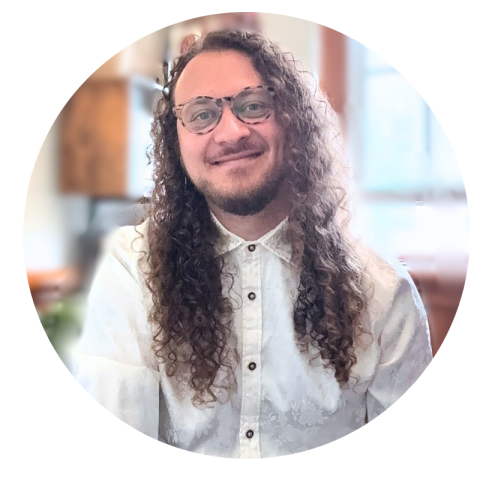
(They/Them) – Research Assistant Professor and Assistant Director, Center for Social Policy in Practice
Dr. Evan England, is the assistant director of the Center for Social Policy in Practice (SPiP) and a research assistant professor at the University of New Hampshire’s Carsey School of Public Policy. They are a first-generation graduate and three-time alumna from the University of New Hampshire, having completed their bachelor's, master's, and doctoral degrees in sociology at UNH. With their focus on social inequality and health equity, Evan has developed relationships with numerous local, statewide, and regional partners to evaluate and improve access to and experiences within healthcare and in broader New Hampshire communities. At SPiP, Evan also co-leads the New Hampshire Early Care and Education Research Consortium.
Deborah Fournier, JD

– Director, Health Law & Policy, Institute for Health Policy and Practice, University of New Hampshire
Deborah H. Fournier, JD has twenty years of health policy experience, including posts at national organizations such as the Association of State and Territorial Health Officials (ASTHO) and the National Academy for State Health Policy (NASHP). Ms. Fournier has also served in two state Medicaid programs, culminating in her serving as NH’s Medicaid Director. Ms. Fournier’s career has encompassed health policy related to public health crises, healthcare financing, payment reform, health insurance coverage programs, social drivers of health, and innovative Medicaid policies. She is currently focused on healthcare affordability and emerging pathways for sustainably financing healthcare services and public health services.
Patty Mathison

(she/her) – Basic Needs Coordinator and Case Manager
Patty started as the inaugural Basic Needs Coordinator and Case Manager in April 2022 following 9 years serving as the Director for the Social Action and Integrative Learning office at George Mason University in Virginia. She has worked within higher education for most of her career in areas such as community engagement, community partnerships, social justice and leadership development where she created and oversaw scholarship programs, taught many leadership classes, coordinated living learning community programs as well as alternative breaks. Throughout her time in higher education, she always felt drawn to students facing basic needs insecurity and mental health challenges. She obtained her second Masters in Counseling and Development with a focus on Community Agency Counseling from George Mason University.
Throughout her experiences, Patty has witnessed and been in awe of the resiliency and determination of so many students. Many working, taking care of family and fighting to be able to get an education against significant odds. Patty's hope is to connect students to resources while also acknowledging and sharing the challenges students face here at UNH. Patty believes in the power of community and believes everyone should have access to education.
Massami Duston

– Strategic Project Manager at Family Aid Boston
Masami Dustin is the Executive and Strategic Projects Manager at FamilyAid, Greater Boston’s largest nonprofit serving children and families experiencing housing instability and homelessness. Reporting directly to the President, Masami plays a central role in aligning organizational strategy with day-to-day operations, coordinating executive functions, and overseeing high-impact initiatives that strengthen outcomes for families across Greater Boston.
Masami’s work spans strategic planning, stakeholder engagement, executive and board support, and cross-departmental project leadership. He most recently managed a $1 million initiative to improve systems of care and address the social determinants of health of children with parents experiencing homelessness. The four-year project involved over 125 organizations in collaborative problem-solving and received national recognition from the Aspen Institute as one of 15 best practices aimed at preventing and ending family homelessness.
Before his time at FamilyAid, Masami studied business management and psychology at UNH, during which time he was a Paul College Dean’s Ambassador and Paul Scholar, Changemaker Collaborative Coach and Program Recruiter, and Semester in the City Alum. Masami graduated summa cum laude from UNH in 2021 as a first-generation student with a degree in Business Management and was awarded the University’s Hood Achievement prize.
Liz Gray

– State Director for SBDC
Liz Gray joined the NH SBDC as State Director in July of 2018. Each year, 3,000 small businesses in approximately 200 New Hampshire communities benefit from the advising and educational programs offered by the NH SBDC. SBDC’s team of certified business advisors delivers highly individualized, confidential advising at no charge to enterprises across New Hampshire, Since 1984 the NH SBDC has advised or trained more than 110,000 New Hampshire entrepreneurs, helping them to start over 2,200 businesses.
Liz leads a team of 18 dedicated professionals that serve the Granite State and work in collaboration with federal, state, and local government agencies, business sector partners and clients. As an outreach program of the University of New Hampshire’s Peter T. Paul College of Business and Economics, NH SBDC is a principal driver of the University’s mission to support the state’s business community.
Inspired and energized by NH SBDC’s client stories, Liz helps create the programs and connections they need to thrive. She is a problem solver and change maker at heart. Her goal as the network’s leader is for NH SBDC to continue to be a welcoming and trusted resource for any small business owner seeking help starting and growing their small business.
Prior to joining the NH SBDC, Liz served as director of entrepreneurship at the N.H. Business Finance Authority. She established Live Free and Start, an initiative to make New Hampshire an even better place for innovative companies to be able to start, grow, and succeed. She held the position of economic development business services manager at the N.H. Department of Resources and Economic Development and has extensive experience within the political community of New Hampshire. Additionally, she worked for more than 10 years in various capacities in the offices of governors Shaheen, Lynch and Hassan, and as a legislative aide in the N.H. State Senate.
Liz was recently elected to her second term on the America’s SBDC’s Board of Directors. She serves as the Board Secretary, participates in the Leadership, Legislative, and Professional Development and Training Committees, as well as Co-Chairs the Small But Mighty State Network. Liz also serves on the UNH Manchester Advisory Board, and on the boards of directors of the UNH Alumni Association and Experimental Program to Stimulate Competitive Research (EPSCoR).
Liz has a Master’s in Public Administration and a Bachelor of Science in Environmental Conservation and International Affairs from the University of New Hampshire.
Alana Davidson
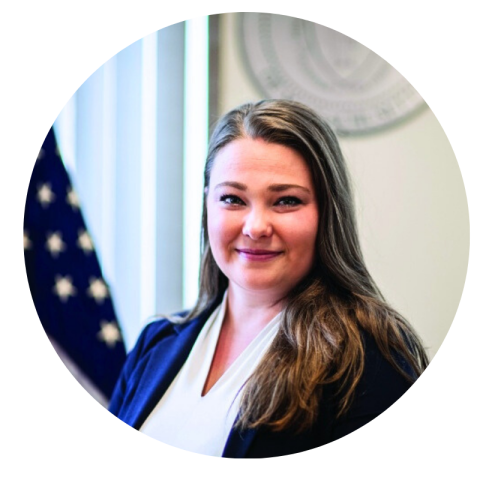
– Director of Communication at Mass Executive Office of Education
Alana Davidson is the Director of Communications at the Massachusetts Executive Office of Education and a co-chair of Governor Maura Healey’s Anti-Hunger Task Force. Davidson has served in state government for eight years in various communications and policy roles, working to promote residents’ food and economic security and equitable access to high-quality education from birth through post-secondary. During the pandemic, Davidson managed the Massachusetts COVID-19 Command Center’s Food Security Task Force.
Prior to state service, Davidson worked at the national, state, and local level on federal nutrition programs and published research on college food insecurity. Davidson is dedicated to reducing poverty and wealth and income inequity, as well as supporting the well-being and whole needs of children and families. She has received numerous awards for her work, including the Rising Star Award from the Tufts University Alumni Association for making a significant impact on the field of nutrition science and policy.
Davidson has a Bachelor of Science in Nutrition from the University of New Hampshire and a Master of Science in Food Policy and Applied Nutrition from the Friedman School of Nutrition Science and Policy at Tufts University.
Sarah Marchant

– COO of New Hampshire Community Loan Fund
Sarah Marchant is the Chief Operating Officer and SVP of the ROC-NH Program at the New Hampshire Community Loan Fund. She is responsible for cross-organizational strategic initiatives, business management, operations, executive communications, and the Resident Owned Communities (ROC) program.
Marchant is a leading voice in New Hampshire and among urban planners nationally on the nexus of community development, affordable homeownership, and energy. Sarah served as the American Planning Associations AICP Commissioner for Region 1 from 2022-2025, as well as President of the Northern New England Chapter of the American Planning Association (NNECAPA) from 2015 to 2021. In 2019, Sarah was appointed to the New Hampshire Housing Finance Authority (NHHFA) Board of Directors, now serving as Vice Chair and in 2023 Sarah was appointed to the ROC USA Board of Directors as Secretary.
Previously, she served the City of Nashua from 2014-2021 as the Director of Community Development, where she developed the city’s affordable housing strategy and led over 70 team members across six departments: Building Safety; Code Enforcement; Planning and Zoning; Waterways and Hydroelectric Facilities; Nashua Transit System; Urban Programs; and various boards, and programs.
Sarah holds a B.A. from the University of New Hampshire and an M.A. from the University of Connecticut. She lives in Brookline, NH with her husband and two children.
Emily Morre

– Foundation Advancement Director at The Lighthouse Foundation
Emily brings nearly two decades of nonprofit development experience, with a career distinguished by innovation, strategic leadership, and a deep commitment to community impact. She oversees the Foundation’s budget planning and directs fundraising initiatives and communication strategies to deepen community engagement and broaden philanthropic support. With a background spanning premier organizations such as the University of New Hampshire Foundation, Wentworth-Douglass Hospital Foundation, and The Music Hall, Emily has consistently delivered results. Her achievements include leading the most successful fundraising year at the Wentworth-Douglass Foundation, securing a landmark $250,000 major gift, and generating more than 40% of annual revenue through record-breaking special events.
Throughout her career, Emily has demonstrated a remarkable ability to build genuine, lasting relationships with donors, stakeholders, and community leaders. Her strengths include annual and major giving, donor stewardship, corporate philanthropy, and strategic event management. She is a passionate advocate for causes that strengthen community well-being and foster equitable opportunities for all.
Emily holds a Bachelor of Science in Nursing from the University of New Hampshire. She is actively involved in the community, serving on various boards such as the Home For All Coalition, Portsmouth Chamber Ambassadors, and engages in volunteer work across the Seacoast region. Known for her creativity, drive, and collaborative leadership, Emily is a dynamic force and a passionate voice for positive change. She resides in Dover with her husband, two children and Bernedoodle, Samson.
Background and Past Conferences
2025 DEI Conference Photos


In 2025, Paul College hosted its third conference. The theme, Expanding Perspective, was a call to action for attendees to challenge preconceptions, break down barriers, and advocate for each other in our workplaces so that everyone can cultivate a path to thriving.
In 2024, with programmatic partnership support from the College of Engineering & Physical Sciences, Paul College hosted its second conference. The theme, Building Bridges, was both a nod to our two colleges coming together, but also to the conference’s core purpose: to create connections across a diverse group of students, staff, faculty, alumni, business leaders, & interested members of the local community to learn, share, & grow in the DEI space.
In 2023, Paul College offered our inaugural conference, with the theme Cultivate Community. The conference brought together students, staff, faculty, alumni, business leaders, and interested members of the community to share best practices and trending skills needed to advance DEI. From the classroom to the workplace and beyond, students learned about inclusive practices and had conversations about DEI biases and blind spots.
